

 Call Us Now
 e-Mail Us Now


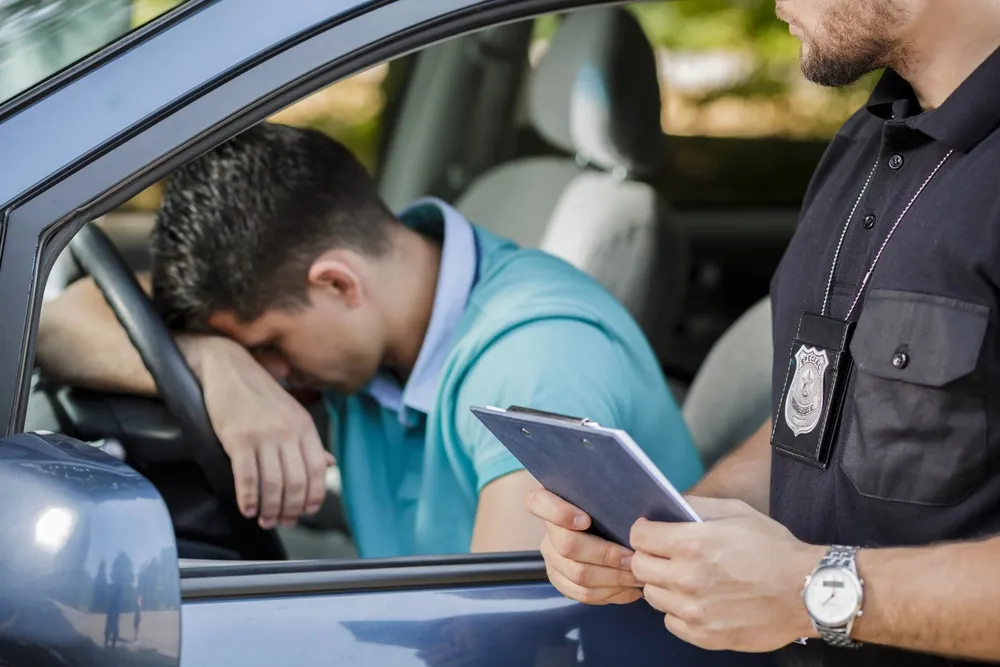
When a police officer pulls you over, it is hard to know what to expect or what to say—especially if you suspect the officer may be looking to make a DUI arrest. Let’s look at how a typical California DUI charge unfolds.
The Stop: How It Works
In California, the police can conduct a DUI traffic stop for two reasons:
- A DUI checkpoint
- “Reasonable suspicion” of the driver
The officer needs a reason to suspect the driver of committing a crime. If a car is driving erratically or violating traffic rules, they may reasonably suspect the driver of DUI. A DUI checkpoint does not require reasonable suspicion for stops, but the checkpoint has to comply with California law, and the officers must select cars for neutral reasons.
Once the police have pulled you over, it is crucial to understand how to act—see our tips here. Remain pleasant and polite, but do not chat, even if the officer tries to draw you out. Police know how to get the answers they want without asking for them, and you can accidentally make an incriminating statement—or a statement that the officer considers incriminating.
The officer will also be looking at your face and behavior for evidence that you are impaired—trembling, bloodshot eyes, odd speech patterns, the smell of alcohol, and other signs. The less you talk, the fewer opportunities the officer has to observe them.
The officer can then ask you to take field sobriety tests (FSTs). These include:
- Writing or reciting the alphabet
- Standing on one leg and counting for about 30 seconds
- Walking heel-to-toe in a straight line while counting steps and keeping your arms at your sides
The officer may also ask you to use a breath-test device or take an oral swab for a preliminary alcohol screening (PAS).
The purpose of these tests is to gather probable cause to make an arrest. They need facts for their report that are sufficient to suggest you are under the influence, and together with your appearance and behavior, your FST tests may give them what they need. You can legally refuse FSTs, although you cannot refuse a PAS test if you are under age 21 or on probation for DUI.
The Arrest
After being arrested, you must take a breath test or a blood test. However, you do have the right to choose the type of test, depending on the circumstances. You may need to take a urine test if:
- Blood and breath tests are unavailable, or
- The officer suspects you of drug use, and you cannot take a blood test for specific medical reasons
See Cal. Veh. Code § 23612. If you refuse to take a chemical test after a California DUI arrest, you will face further penalties.
It is wise to call a DUI attorney as soon as you are able. Two separate processes start now—the criminal case, involving court-mandated penalties, and the administrative case, in which the DMV determines the status of your driver’s license.
Unless you have an out-of-state driver’s license, the officer will confiscate it and give you a temporary license usable for 30 days. You will need to schedule a DMV hearing if you intend to challenge any driver’s license penalties.
After a simple DUI, you may be released with a citation to appear once your arrest and booking are complete. Otherwise, bail will depend on the circumstances of your offense, whether you are a previous offender, whether you have community ties, and similar factors. For a first offense, you may be able to get release on your own recognizance—that is, without payment.
The Court Process
At your arraignment, you can hear the charges against you and enter a plea. The arraignment should take place within 48 to 72 hours. Your DUI defense attorney can appear for you and guide you through this process.
Your attorney will review your case for weaknesses and unlawful procedures. They will ask questions like:
- Did the police officer have a reasonable suspicion that was enough to stop you?
- If the stop took place at a DUI checkpoint, was that a lawful checkpoint—properly advertised and neutral in its execution?
- Did the officer really have probable cause to arrest you? FSTs are often faulty. They can give poor results due to weather, illness, anxiety, or bias on an officer’s part.
- Were the results of your chemical test lawfully obtained and reliable?
After their analysis, your defense attorney will develop a strategy to attack the prosecution’s case. If the prosecution cannot use its key evidence, it may accept a plea or drop the case altogether.
The DMV Process
Your driver’s license penalties will be handled separately through the DMV. You must assert your right to a DMV hearing if you want to contest your license suspension. Our team has outlined a plan of attack for the DMV hearing.
DMV hearings use a different standard of evidence than criminal proceedings, analyzing the issues independently. If the officer cannot prove that the stop occurred for “reasonable cause” and that they met the legal requirements at every step, the DMV may overturn your license suspension.
Call Us Today
If you have been involved in a DUI stop in Los Angeles County, there’s no time to lose. Contact us today at 866-927-3295, and let us protect your rights and your future.


